I'm coming to believe this trend to remove treble and bass and balance buttons a few years back was simply a con to make the hifi industry a huge amount of money. I haven't compared these but all of this talk of particular amps sounding warm or clinical etc surely could have been resolved by turning a button a few mm? Does anyone agree. I mean I appreciate there might be theoretical distortion or whatever but surely that's what the "analogue sound" is all about? Anyone agree?

Question Tone controls
- Thread starter Barnaby
- Start date
You are using an out of date browser. It may not display this or other websites correctly.
You should upgrade or use an alternative browser.
You should upgrade or use an alternative browser.

Al ears
Well-known member
- Nov 23, 2008
- 14,103
- 8,646
- 64,070

























No, not really.I'm coming to believe this trend to remove treble and bass and balance buttons a few years back was simply a con to make the hifi industry a huge amount of money. I haven't compared these but all of this talk of particular amps sounding warm or clinical etc surely could have been resolved by turning a button a few mm? Does anyone agree. I mean I appreciate there might be theoretical distortion or whatever but surely that's what the "analogue sound" is all about? Anyone agree?
However, I do, in my later years, prefer the inclusion of a balance control and find that if you do need tone controls you've bought the wrong amp / speaker combo......
NOTE: there is already a Tone Controls thread going that was started in 2022.


nopiano
Well-known member
- Feb 15, 2009
- 4,972
- 4,894
- 33,570





It’s a while since I used tone controls at home. In the car, or with an Amazon Echo, or a TV soundbar, you can indeed tame boominess or enhance vocals. The snag is traditional bass and treble controls on Hifi offered excessive boost or cut, across a vast range of frequencies. Ideally, one needs finer and narrower tweaks, hence today DSP or room correction systems are popular.
Unfortunately, many standard tone controls weren’t necessarily flat when set to zero, hence the bypass button was invented. That’s an ideal option, but many - me included - would rarely bother! However, a few newer designs do offer tone controls, as well as classic designs like Luxman always have.
Unfortunately, many standard tone controls weren’t necessarily flat when set to zero, hence the bypass button was invented. That’s an ideal option, but many - me included - would rarely bother! However, a few newer designs do offer tone controls, as well as classic designs like Luxman always have.

Vincent Kars
Well-known member
- Mar 6, 2021
- 545
- 622
- 11,770

Really?to remove treble and bass and balance buttons a few years back
In the 80's the HiFi people uses graphic equalizers.
The Audiophiles insisted on removing tone control, balance as this of course was tampering with sound quality. Less is More!
Today you won't have something as primitive as tone control. You use EQ or DRC (Digital Room Correction). You do so in the digital domain, not in the analog domain. Better use DSP!

Steve983
Well-known member
- May 31, 2014
- 172
- 229
- 18,970
I've always preferred having tone controls, won't buy an amp without them.

PieterG
Well-known member
- Nov 1, 2025
- 99
- 105
- 220
That's a fair point. But what's the best point in the signal chain to apply corrections/changes?Today you won't have something as primitive as tone control. You use EQ or DRC (Digital Room Correction). You do so in the digital domain, not in the analog domain. Better use DSP!
In my new setup there's only 1 option: the streaming device. If i wanted to fiddle with controls, maybe it would be nice to have that possibility in the DAC or the (pre)amp so i could evaluate the differences. Maybe it's irrelevant? (honest question)
Al ears
Well-known member
- Nov 23, 2008
- 14,103
- 8,646
- 64,070
You are assuming a modern amplifier can do that. Many cannot.Really?
In the 80's the HiFi people uses graphic equalizers.
The Audiophiles insisted on removing tone control, balance as this of course was tampering with sound quality. Less is More!
Today you won't have something as primitive as tone control. You use EQ or DRC (Digital Room Correction). You do so in the digital domain, not in the analog domain. Better use DSP!
Tone control and DRC are not the same thing that the OP is talking about.
There are quite a few modern integrated amplifiers that incorporate Tone Controls, mine being one of them, and digital doesn't enter into the equation.

Shrek
Well-known member
- Feb 8, 2023
- 1,267
- 806
- 6,070
Ive never bought a Amp without tone control. If i ever do it would be a very expensive one. No Amp is perfect.I've always preferred having tone controls, won't buy an amp without them.
Its personal preference has with music.
My ears are not your ears .
Tone controls were useful when loudspeakers had problems with getting low and high. You could compensate. Today, equipment is so good that, for reasonable prices, you can get an optimised system for your room that don't need tone controls. And the standard bass and treble controls found on some amplifier change by definition the wrong frequencies. If you need to correct some very specific cases, you need a parametric equalizer (analogue or digital).
Al ears
Well-known member
- Nov 23, 2008
- 14,103
- 8,646
- 64,070
Exactly, you only need tone controls if something within your choice of amp and speakers is wrong....Ive never bought a Amp without tone control. If i ever do it would be a very expensive one. No Amp is perfect.
Its personal preference has with music.
My ears are not your ears .
Thanks for clarifying all this. Apologies for not noticing the tc thread already going. This all started because I’m looking got a xx way to EQ my Apple Music in iOS and failing outside the presets.
The reason I’m looking is due to age related high frequency hearing loss which I doubt any amp would address on its own - unless you can suggest something else to help? I wonder if there an affordable hardware solution I could use between my iOS device and dac?
At this point I n my life I don't really care about audio equipment but the hearing is a pain.
The reason I’m looking is due to age related high frequency hearing loss which I doubt any amp would address on its own - unless you can suggest something else to help? I wonder if there an affordable hardware solution I could use between my iOS device and dac?
At this point I n my life I don't really care about audio equipment but the hearing is a pain.
They are certainly helpful if there's a room problem too though conventional 'analogue' tone controls are a rather blunt tool for it.Exactly, you only need tone controls if something within your choice of amp and speakers is wrong....
Add that a low volume our hearing is far less sensitive to bass and treble, the old FM curve and tone controls, whether digital or otherwise are not necessarily a bad thing imho.
nopiano
Well-known member
- Feb 15, 2009
- 4,972
- 4,894
- 33,570
If like me you’re trying to avoid hearing aids with hifi listening then you might find this helpful. With the AirPod Pro 2nd generation as in ear monitors, and a current iPhone or iPad, it has software with which you can take a hearing test. It’ll plot your dips in a similar way to an audiologist. The software can then apply an inverse curve just as hearing aids do.Thanks for clarifying all this. Apologies for not noticing the tc thread already going. This all started because I’m looking got a xx way to EQ my Apple Music in iOS and failing outside the presets.
The reason I’m looking is due to age related high frequency hearing loss which I doubt any amp would address on its own - unless you can suggest something else to help? I wonder if there an affordable hardware solution I could use between my iOS device and dac?
At this point I n my life I don't really care about audio equipment but the hearing is a pain.
In the knowledge of your own curve, you can use a DSP equaliser to replicate it to the extent that suits you. In practice, you may find that even limited correction goes a long way.
Al ears
Well-known member
- Nov 23, 2008
- 14,103
- 8,646
- 64,070
Quad got it right with their slope controls.They are certainly helpful if there's a room problem too though conventional 'analogue' tone controls are a rather blunt tool for it.
Add that a low volume our hearing is far less sensitive to bass and treble, the old FM curve and tone controls, whether digital or otherwise are not necessarily a bad thing imho.
All hifi equipment I've bought had tone controls - but I've never ever used them. A source piece did force my hand once, but I quickly dispensed with the turd - NAD C521i CD player. Horrid, sibilant thing.
In the car I do like a V curve so will always use tone controls, because I'm not focusing on the music as much as at home - one is driving after all.
In the car I do like a V curve so will always use tone controls, because I'm not focusing on the music as much as at home - one is driving after all.

Jasonovich
Well-known member
- Jul 28, 2022
- 4,282
- 3,448
- 19,570
I'm not one for tone controls, I rather have the warts 'n' all, I can live with that. Tone controls make the sound, sound less natural.
I appreciate some people see the value in this and that's what matter.
I appreciate some people see the value in this and that's what matter.

davidf
Well-known member
- May 9, 2017
- 2,030
- 1,973
- 23,070
I've been saying for years that I feel one of the factors in the decline of the audio industry was British manufacturers removing tone controls from amplifiers back in the late 80s/early 90s. While they thought they were being purist about things, maybe the public saw it as dictating to them how to listen to music? I think that's when many started losing interest. I feel that if someone is paying for it, they should be able to listen to music any way they see fit, rather than being told what they should be buying and how they should be listening to it.I'm coming to believe this trend to remove treble and bass and balance buttons a few years back was simply a con to make the hifi industry a huge amount of money. I haven't compared these but all of this talk of particular amps sounding warm or clinical etc surely could have been resolved by turning a button a few mm? Does anyone agree. I mean I appreciate there might be theoretical distortion or whatever but surely that's what the "analogue sound" is all about? Anyone agree?
I've been saying for years that I feel one of the factors in the decline of the audio industry was British manufacturers removing tone controls from amplifiers back in the late 80s/early 90s. While they thought they were being purist about things, maybe the public saw it as dictating to them how to listen to music? I think that's when many started losing interest. I feel that if someone is paying for it, they should be able to listen to music any way they see fit, rather than being told what they should be buying and how they should be listening to it.
That said in my limited experience I've always found tone controls ultimately detrimental. Increasing treble aids clarity but then adds distortion in the form of sibilance, for example. Increasing the bass then affects clarity, another symptom.
Tone controls have never affected my purchasing decisions either way, but I find your opinion a bit puzzling or unfair nonetheless.
Did the lack of tone controls on British amplifiers kill them? I highly doubt it. There was the sheer proliferation of Japanese componentry to deal with, as you have with the Chinese/Singapore/Koreans today.
And if what you think is true then you should be much more enthusiastic about Eversolo products - because I've read more than a few professional British reviews stating that fiddling about can just about net you the sound you crave.
And in fact it's only in this century that any attention has actually been paid to implementing tone controls that are the least destructive.
EDIT: Here's what I think bludgeoned British hi-fi - high cost/low power amps like Cyrus which must have confused the hell out of the average consumer in the onslaught of attractively priced and designed high wattage Japanese amps.
So again, I'm not so sure about your argument that the lack of tone controls killed British hi-fi. But I'd be happy to hear your counter argument.
Last edited:

RomanticWarrior
Well-known member
- Feb 10, 2025
- 39
- 52
- 620
The removal of the 'loudness' control is equally lamentable. Again if it's there you don't have to use it. Because I usually listen at low volumes this control on my NAD amp makes all the difference to me, especially now my hearing is not what it once was. Listening to music is supposed to be enjoyable - not a straight-jacket experience prescribed by someone else's rules.
davidf
Well-known member
- May 9, 2017
- 2,030
- 1,973
- 23,070
I didn't say it killed British hi-fi, I said I thought it was one of the factors involved - and it slowly drew people away from hi-fi in general - a hobby people used to have fun with, which was slowly dissolved with the dictation of how purchasers should use what they've purchased.That said in my limited experience I've always found tone controls ultimately detrimental. Increasing treble aids clarity but then adds distortion in the form of sibilance, for example. Increasing the bass then affects clarity, another symptom.
Tone controls have never affected my purchasing decisions either way, but I find your opinion a bit puzzling or unfair nonetheless.
Did the lack of tone controls on British amplifiers kill them? I highly doubt it. There was the sheer proliferation of Japanese componentry to deal with, as you have with the Chinese/Singapore/Koreans today.
And if what you think is true then you should be much more enthusiastic about Eversolo products - because I've read more than a few professional British reviews stating that fiddling about can just about net you the sound you crave.
And in fact it's only in this century that any attention has actually been paid to implementing tone controls that are the least destructive.
EDIT: Here's what I think bludgeoned British hi-fi - high cost/low power amps like Cyrus which must have confused the hell out of the average consumer in the onslaught of attractively priced and designed high wattage Japanese amps.
So again, I'm not so sure about your argument that the lack of tone controls killed British hi-fi. But I'd be happy to hear your counter argument.
Lower powered amps weren't really an issue back then, as ported speaker designs appeared, which increased their efficiency. There were plenty of alternatives around with power, if it were needed. 30-50wpc was pretty normal. Now it's not, because speaker demands are generally greater.
I just can't get excited about Eversolo because I feel they just sound thin and uninvolving. To me, the leaner sound gives the impression of control and detail. This may well suit some systems or ears, and I actually don't mind a lean sounding system (some of my favourite products sound like this) - I just want a bit of excitement to go with it, and I want that without having to mess with EQ. I like a system to perform well BEFORE messing with EQ, or avoiding using it in the first place. Always liked the old Audiolab 8000a tone controls - a subtle adding or subtracting a couple of dB of bass or treble could help a particular recording sound more pleasing to the ear.
Steve983
Well-known member
- May 31, 2014
- 172
- 229
- 18,970
I love my old NAD amps with the loudness button. Not always but depending on the music it really transforms the sound especially at lower levels.The removal of the 'loudness' control is equally lamentable. Again if it's there you don't have to use it. Because I usually listen at low volumes this control on my NAD amp makes all the difference to me, especially now my hearing is not what it once was. Listening to music is supposed to be enjoyable - not a straight-jacket experience prescribed by someone else's rules.

matthewpianist
Well-known member
- Feb 18, 2022
- 1,261
- 1,715
- 8,570
I don't have strong feelings about tone controls, but they can be useful with some recordings and I find them preferable to the trend for multiple digital filter options and parametric EQ, which can both quickly turn into rabbit holes. A simple adjustment of bass or treble for a particular recording can be quite helpful, without becoming too much of a headache. One of my favourite amps is the NAD C316BEE V2, and the tone controls on that are pretty decent.
Last edited:
Quick update for anyone interested. I have bought a Fiio K13 R2R which has a PEQ and so far I've found it to be very useful, not because of any deficiencies of equipment etc but just because productions and styles of music differ. All good stuff IMO
Shrek
Well-known member
- Feb 8, 2023
- 1,267
- 806
- 6,070
im jealous 😜Quick update for anyone interested. I have bought a Fiio K13 R2R which has a PEQ and so far I've found it to be very useful, not because of any deficiencies of equipment etc but just because productions and styles of music differ. All good stuff IMO
Jasonovich
Well-known member
- Jul 28, 2022
- 4,282
- 3,448
- 19,570
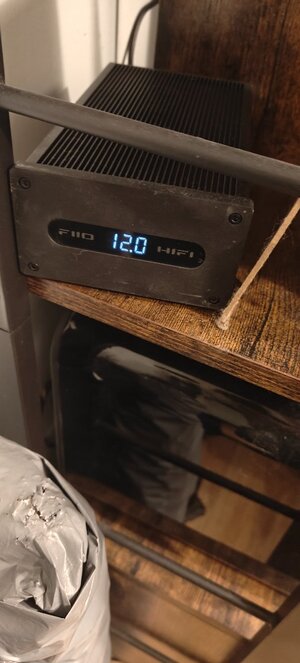
When you get yours, get a decent linear power supply like the FiiO pl50.im jealous 😜
You can get a good price second hand on eBay. 😉
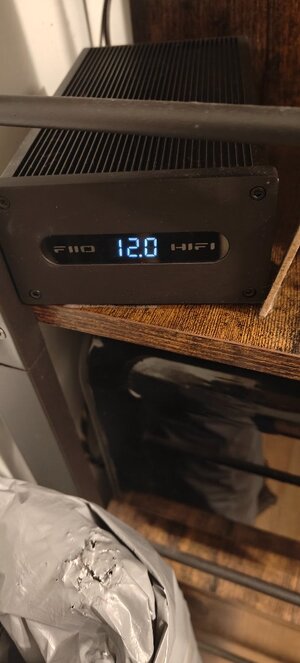
It'll sing like a Denafrips 😎
Attachments
Last edited:
Similar threads


- Replies
- 31
- Views
- 20K
- Replies
- 10
- Views
- 4K



Space.com is part of Future plc, an international media group and leading digital publisher. Visit our corporate site.
© Future Publishing Limited Quay House, The Ambury, Bath BA1 1UA. All rights reserved. England and Wales company registration number 2008885.
 Facebook
 Twitter
 Instagram