• Thank you all very much for sharing your time with us in 2025. We hope you all have a safe and happy 2026!

Hi Fi Dealers in 2026

record_spot

Well-known member
May 30, 2015
641
515
19,770
So on another thread, there's been a bit of a discussion around the role of the hifi dealer today compared to say the 1990s and before the advent of online buying.

I guess if you live in a reasonably sized town or city, you might have a few dealers around to choose from. Maybe not quite so many as there were 30 or 40 years ago, but still a decent number.

If you stay somewhere outside a city or town, your choice probably drops somewhat and depending on what you're looking for or how many items you want to compare.

Online shopping opens up in the late 90s and burgeons thereafter. Consumer protections kick in that allow buyers to open and examine products to afford the same luxury they have instore. The legislation requires them to take "reasonable" (always thought that wording was weak, but there it is) care of the goods while in their care and if they eventually opt to return it.

Before too long, some bricks and mortar dealers start going to the wall, consumer trends move away from traditional hifi to more portable audio gear, home cinema and in time, bluetooth capable kit.

Now, for me, online shopping has been a blessing. I haven't demo'd anything in a shop since 2012 (Tannoy DC4 speakers in case you're wondering). Everything since has been an online purchase. Sometimes brand new (hello Richer Sounds), often used (hello lots of other folk). I like to research what I need online from a variety of information providers or reviewers (not YouTubers) then draft my shortlist and then decide from there. Generally, it works a treat.

These days, I stay at best an hour or so and a fair bit more in some cases, from my nearest hifi shops in Edinburgh, Glasgow and Carlisle. And the shopping experience has vastly changed in the last 40 years. Where once you could walk in off the street and literally walk out with a new bit of kit an hour later has been replaced by "have you had a look at the website, it's all on there".

So where are you at in this?
 
So on another thread, there's been a bit of a discussion around the role of the hifi dealer today compared to say the 1990s and before the advent of online buying.

I guess if you live in a reasonably sized town or city, you might have a few dealers around to choose from. Maybe not quite so many as there were 30 or 40 years ago, but still a decent number.

If you stay somewhere outside a city or town, your choice probably drops somewhat and depending on what you're looking for or how many items you want to compare.

Online shopping opens up in the late 90s and burgeons thereafter. Consumer protections kick in that allow buyers to open and examine products to afford the same luxury they have instore. The legislation requires them to take "reasonable" (always thought that wording was weak, but there it is) care of the goods while in their care and if they eventually opt to return it.

Before too long, some bricks and mortar dealers start going to the wall, consumer trends move away from traditional hifi to more portable audio gear, home cinema and in time, bluetooth capable kit.

Now, for me, online shopping has been a blessing. I haven't demo'd anything in a shop since 2012 (Tannoy DC4 speakers in case you're wondering). Everything since has been an online purchase. Sometimes brand new (hello Richer Sounds), often used (hello lots of other folk). I like to research what I need online from a variety of information providers or reviewers (not YouTubers) then draft my shortlist and then decide from there. Generally, it works a treat.

These days, I stay at best an hour or so and a fair bit more in some cases, from my nearest hifi shops in Edinburgh, Glasgow and Carlisle. And the shopping experience has vastly changed in the last 40 years. Where once you could walk in off the street and literally walk out with a new bit of kit an hour later has been replaced by "have you had a look at the website, it's all on there".

So where are you at in this?

Bored.
Your opinion of dealers, especially one brave enough to post on this forum, are well established.
Each to their own and I feel sure many will agree.
 
  • Like
Reactions: DougK1 and SteveH72
Bored.
Your opinion of dealers, especially one brave enough to post on this forum, are well established.
Each to their own and I feel sure many will agree.

Hey, this was an open question, so thanks for your views, but you don't have a view of your own on any of this that's beyond "each to their own"?

If you're cheek by jowl with a dealer or three, good for you, (te salu Don Corleone) and member DavidF had a fair point, the good dealers will do the right thing, but in 2026?

I've 35 dealers listed on my hifi bookmarks. And most of them are UK wide. None within the Edinburgh, Glasgow and Carlisle ones and within 60-90 minutes distance. Where's that relationship at these days?
 
  • Like
Reactions: Dave_ and Entrigo
I am in London so am literally spoilt for choice, but still do most of my purchasing online - the rare occasions when I buy new.

Mostly laziness tbh as it's probably still an hour and a Hal;f round journey at the least to get to one and as I actually love the atmosphere of an hi-fi shop...
 
  • Like
Reactions: record_spot
Following extensive research online and on forums, asking owners, I've bought my kit in the following way:

Amp and SACD - SSAV store in my town. The only hifi shop here now. Bought during the first COVID wave, but emailed SSAV HO and they sent them direct to me instead of the shop.

Speakers. Online and in store, SSAV again. Current speakers bought online from HiFi Corner, Edinburgh.

Headphones. SSAV, store again, plus online too.

Turntable. Online, from from a store in The Netherlands. Almost 30% off UK list price, both online stores and bricks and mortar establishments

Most of my cartridges have been bought online, from UK, and direct from Japan.

I would like to state that I've only ever returned one item after trying it in my system. I prefer to use physical shops where I can.
 
The only time you don't listen to something you are interested in is if there are no dealers within range (A day trip to a dealer is always an option), as the chances of you getting a balanced system from reviews and opinions is pretty small (If you see a person swopping and changing equipment every 5 minutes, then they have ignored this rule and wasted a lot of money in the process), whereas if you take your time and listen, you will find synergy (If you follow this rule then your system will last for years and you wont think about changing all the time, instead you will just sit back and enjoy music.
You have been lucky if you ignored this rule and got a balanced system, but your system would probably be even better (And maybe even cheaper) if you had made the effort to go and listen to the equipment first.

Bill
 
If I were setting up any electronics retail business now, I think my high street presence would be absolutely zero. My focus would have to be on low infrastructure costs and then using those savings to cut my prices, market effectively and back that up with an effective returns / servicing policy. If I can attract business with a low price backed by robust after sales service, then I think that for many people is an attractive proposition.

I think brand loyalty is on the wane and the way consumers shop has changed in the past 10+ years, and businesses have to adapt because the proportion of customers who shop in "traditional" ways can only be on the decline.

In my case I have a couple of large Hi-Fi stores in less than a half hour drive. I've auditioned kit at both, bought from one, but also bought successfully auditioned kit elsewhere as for me, price is king and if I can buy the same end product elsewhere for a lower price, I will. I know this makes me part of the problem but I'm not alone and this is just how retail has evolved.
 
  • Like
Reactions: record_spot
If I were setting up any electronics retail business now, I think my high street presence would be absolutely zero. My focus would have to be on low infrastructure costs and then using those savings to cut my prices, market effectively and back that up with an effective returns / servicing policy. If I can attract business with a low price backed by robust after sales service, then I think that for many people is an attractive proposition.
I'll leave the "low price" thing alone, as that's not sustainable, but the high street thing is a catch 22. You want to be visible to attract people, especially potential walk-in sales. But, and it's a big but, rents and rates etc are astronomical for prime placement and for size.

One reason the industry (and I'm saying "one reason") is that there's very little audio store presence on the high street any more. When people go shopping, if they don't see it, they're not thinking about it. Audio needs high street presence, but the numbers just cannot add up. But then we're onto the conversation of the Government and councils allowing ridiculous rents and rates just to make a quick buck, and in the process, helping to bury high street shopping. And if you're not visible, promoting/advertising is a job in itself.

If I was to do this all over again, I would want half a million behind me in order to do everything I wanted to do. And ideally, buy the premises rather than rent.
 
  • Like
Reactions: record_spot
In my case I have a couple of large Hi-Fi stores in less than a half hour drive. I've auditioned kit at both, bought from one, but also bought successfully auditioned kit elsewhere as for me, price is king and if I can buy the same end product elsewhere for a lower price, I will. I know this makes me part of the problem but I'm not alone and this is just how retail has evolved.
But hopefully you've given your local dealers the chance to compete? If you lose one do those dealers, you've halved your choice, and if they go, you're stuck with mail order.
 
  • Like
Reactions: record_spot
Audio needs high street presence, but the numbers just cannot add up.
But does it really need the presence? I'd suggest most Hi-Fi purchasers don't impulsively think "Ah, here's a Hi-Fi shop, I'll pop in and perhaps spend £x,xxx on something I didn't know I needed". I'm being a bit facetious there, but hopefully the gist is conveyed.

I think some prospective H-Fi purchasers do want that assurance of being able to see and hear potential purchases in action, but I do doubt that there's sufficient footfall and conversion of that footfall to pay for the astronomical rent and rates.

Business is always a balancing act. How do I shape the business to efficiently cater to the buying behaviours of most customers?
 
  • Like
Reactions: record_spot
There’s a place for the High St dealers, but it’s much more limited these days. Only Audio T, Richer Sounds and Sevenoaks seem to survive as chains.

As David says, the rent, rates etc., must be a big factor, but frankly that’s affecting many high street outlets of any type. Out of town ‘destination’ stores can have much better spaces and permit specialisation, at much lower overheads. My last big purchase at list price was my ATC speakers, at the now closed Paul Green Hifi in Bath. Paul retired and his industrial unit located site closed too, but he’d had decades of successful trading before in Bath city centre before price hikes drove him away. Since then I’ve become braver at buying used, from forums or eBay.

In my days working at a hifi store in the 1970s and 1980s the footfall was encouraged by the luxury of large window displays, and a regular demand for blank audio cassette and later video tapes. Plus it shared the corner site with a record shop, which was always packed with youngsters , with a quieter classical department upstairs. The main point then was that owning a “stereo” or hifi system was a thing, like having a large TV or a new smartphone or tablet is today. It was also located in a relatively wealthy part of Surrey.

When things got quieter in the summer the boss always half-joked he’d open an ice cream counter. But then Betamax and VHS arrived, and the shop happily carried these machines alongside audio. The boxes sold themselves, especially with clever finance that rivalled rental costs, plus a steady demand for blank tapes. That kept the hifi side afloat for the cooler months. It’s just survived a move due to redevelopment and was bought by a London store (Now I remember it was Bartletts).

It’s just not like that today!
 
Last edited:
But does it really need the presence? I'd suggest most Hi-Fi purchasers don't impulsively think "Ah, here's a Hi-Fi shop, I'll pop in and perhaps spend £x,xxx on something I didn't know I needed". I'm being a bit facetious there, but hopefully the gist is conveyed.

I think some prospective H-Fi purchasers do want that assurance of being able to see and hear potential purchases in action, but I do doubt that there's sufficient footfall and conversion of that footfall to pay for the astronomical rent and rates.

Business is always a balancing act. How do I shape the business to efficiently cater to the buying behaviours of most customers?
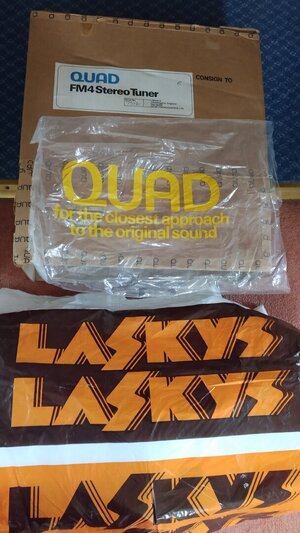
No, but if you go back to the 80s, hi-fi stores had quite a presence on the high street, almost as much as record stores. In Birmingham city centre we had Superfi, Richer, Laskeys, Hornton's, Wires, Currys, Dixons, a Sony Centre, and even Virgin record store had a hi-fi section at one point. There was more than that, that's just off the top of my head. There was a place that opened up which was a big online retailer, HyperFi I think, which then became something like Naam Audio.

When you're walking around a city centre, there will be many things 'not on your mind', but if you see an interesting shop, you'd go in and have a look, even if you weren't buying. And if there's a number of shops scattered around town which did the same thing, it looks healthy for that industry. It stays in people's minds. But take it all away and it'll get forgotten.

Problem is, it's been too long. Too much has changed. Demand has fallen to a point where a presence now wouldn't sustain a city centre premises. And you certainly wouldn't be able to sustain anything with the sort of margins available from the budget popular stuff people seem to be buying now. When I think back to Laskeys, it was on two floors. Great shop, as downstairs was portable hi-fi, VCRs, TVs, Laserdisc players, and some other stuff I didn't look at, but the whole of upstairs was purely hi-fi. Even if that was still there, and as busy as it used to be, you'd need a huge amount of staff to maintain security - it just wouldn't be viable in any way shape or form. You'll have about three or four members of staff at the most nowadays. Hence the 'by appointment' need. I'm guessing my ultimate vision of what I would want to end up with will never be realised.
 
Last edited:
It is a shame as my local independent Hi-Fi shop closed some 20 years back. That was nothing really to do with changing consumer behaviours, moreso the fact that it's hard to survive selling a relatively niche product range in a City with only about 50,000 residents.

Similarly, we're set to lose our independent guitar shop shortly, though in that case it definitely is largely driven by the crazy hike in rental costs. Every one of their guitars can be bought more reasonably elsewhere so they're just in this slow death spiral of incurring losses month by month until they HAVE to call it quits. Buying guitars online now is also very convenient and cost effective, so there are parallels with Hi-Fi.
 
1/ Rent decent location for specialist shop: £100,000
2/ Utilities Electricity, water, internet £10,000
3/ one member of Staff £25,000
4/ Small Business Rates £12,000
5/ Insurance - (public liability, contents, employer’s liability) £1,500
6/ Stock hifi is expensive £250,000
7/ Shop fittings / POS / £35,000

£500k investment before you sell one item of Hifi
 
No, but if you go back to the 80s, hi-fi stores had quite a presence on the high street, almost as much as record stores. In Birmingham we had Superfi, Richer, Laskeys, Hornton's, Wires, Currys, Dixons, a Sony Centre, and even Virgin record store had a hi-fi section at one point. There was more than that, that's just off the top of my head. There was a place that opened up which was a big online retailer, HyperFi I think, which then became something like Naam Audio.

When you're walking around a city centre, there will be many things 'not on your mind', but if you see an interesting shop, you'd go in and have a look, even if you weren't buying. And if there's a number of shops scattered around town which did the same thing, it looks healthy for that industry. It stays in people's minds. But take it all away and it'll get forgotten.

Problem is, it's been too long. Too much has changed. Demand has fallen to a point where a presence now wouldn't sustain a city centre premises. And you certainly wouldn't be able to sustain anything with the sort of margins available from the budget popular stuff people seem to be buying now. When I think back to Laskeys, it was on two floors. Great shop, as downstairs was portable hi-fi, VCRs, TVs, Laserdisc players, and some other stuff I didn't look at, but the whole of upstairs was purely hi-fi. Even if that was still there, and as busy as it used to be, you'd need a huge amount of staff to maintain security - it just wouldn't be viable in any way shape or form. You'll have about three or four members of staff at the most nowadays. Hence the 'by appointment' need. I'm guessing my ultimate vision of what I would want to end up with will never be realised.
Music Matters and Griffin Audio plus if you wanted a Marantz CD52 mk2 a pioneer A300x and a pair of Mission 731is, I've picked a what hifi award winner from the early 90 you could buy that system from 2 or 3 places in Redditch pop about 60K
 
Music Matters and Griffin Audio plus if you wanted a Marantz CD52 mk2 a pioneer A300x and a pair of Mission 731is, I've picked a what hifi award winner from the early 90 you could buy that system from 2 or 3 places in Redditch pop about 60K
I was thinking more within the ring road of the city centre - Bob was on those outskirts.
 
1/ Rent decent location for specialist shop: £100,000
2/ Utilities Electricity, water, internet £10,000
3/ one member of Staff £25,000
4/ Small Business Rates £12,000
5/ Insurance - (public liability, contents, employer’s liability) £1,500
6/ Stock hifi is expensive £250,000
7/ Shop fittings / POS / £35,000

£500k investment before you sell one item of Hifi
That reminded me of the ‘sad but true’ saying:-

A. How do you make half a million pounds selling hifi?

Q. Start with a million!
 
I think more than ever people become lazy (generalisation), not helped by the Internet. Most would rather chance their arm and buy blind, something I don't subscribe to, unless it's a used model, such as my Exposure CDP.

I believe high street retailers need to adapt to modern circumstances. So for independent dealers location is so important: Easy access, convenient parking etc etc, which is no different for any retailer, like greengrocers, ironmongers and so on and so forth.
 
I've mentioned this before. I live in a town of about 11000 population, my employer used to sell hifi in their shops. Four shops within a ten mile radius. On top of that there were at least three other shops selling hi-fi within that same radius. My employer stopped selling hifi separates 20 years ago and all but one of the other hifi shops has gone. Wilkinson's in Nelson, Lancashire,

I've been in and seen a customer that came from Leeds, for valves for his amp and a customer from Scotland. They get customers from all over the UK because there are so few independent dedicated hifi shops in the UK now. It keeps them in business but clearly there is no longer the customer base to have dedicated hifi shops all over the UK.

My employer stopped selling hifi because our customers just weren't buying it.
 
  • Like
Reactions: DougK1 and nopiano

TRENDING THREADS

Latest posts